M1 certificate provided | Delivery within 24 working hours | Tel. : +33 1 40 20 02 96

At Alfaflor, we offer tailor-made solutions for fireproofing fabric, adapted to ERP: performance halls, theaters, hotels, etc. To fireproof curtains, fabric decorations, or other textile elements, we use two techniques: spraying for small quantities, offering rapid and precise application, and soaking for uniform impregnation on large surfaces. Our treatments are M1 certified, guaranteeing that each flame-retardant fabric meets current fire safety standards.

Spray fireproofing

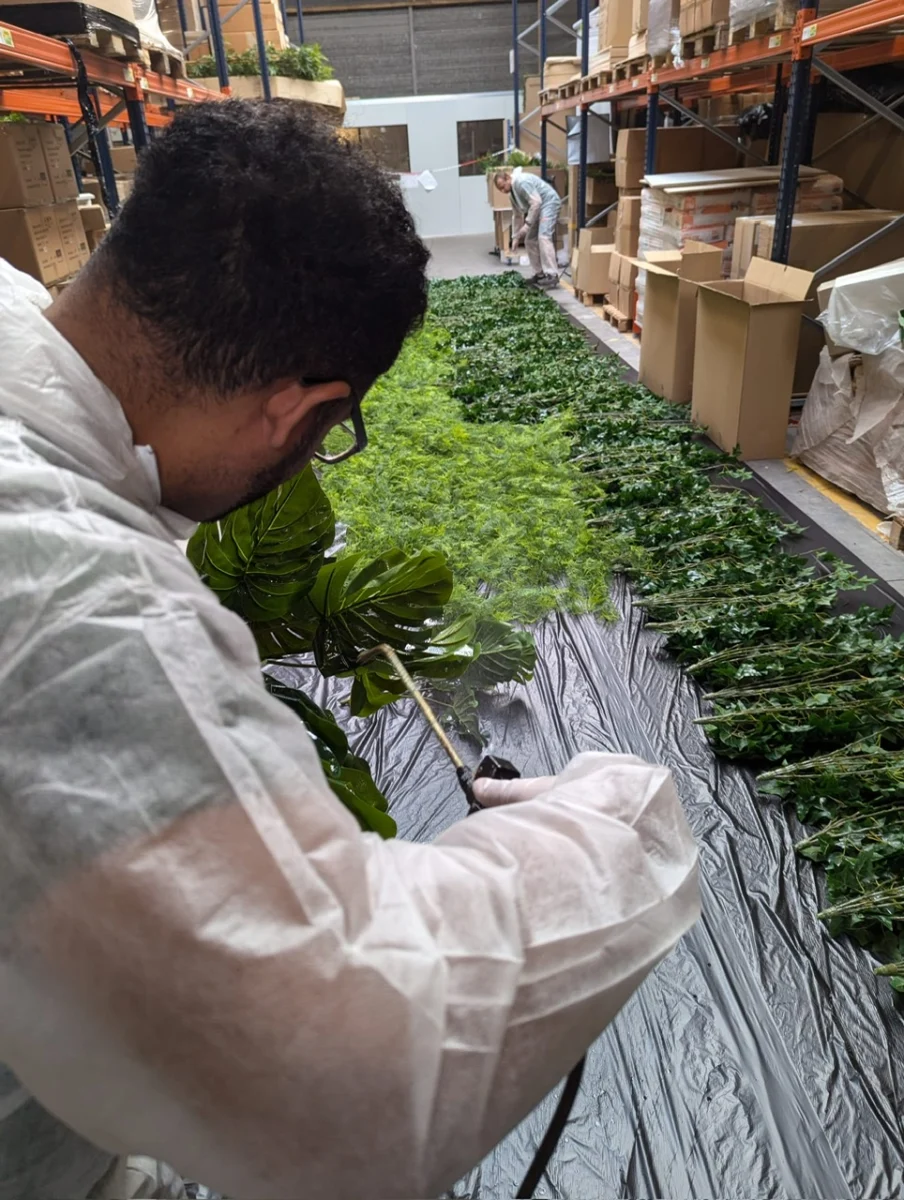
We offer a spray fireproofing service to ensure your materials meet M1 fire safety standards. Specializing in the treatment of fabric widths, cardboard, and artificial plants, we use certified products for lasting and effective protection against fire. Entrust us with your materials: our treatment, carried out in our workshops, ensures their compliance with fire safety standards while preserving their integrity and aesthetics.

What is spray fireproofing?

Spray fireproofing is a method of fire protection that involves applying a fire retardant directly to the surface of a material using a specialized sprayer. This process aims to delay the spread of flames and improve the fire resistance of treated materials, whether fabrics, wood, cardboard, or other flammable surfaces.

This method is particularly suitable for large surfaces or materials that require uniform application of the product without altering their appearance or texture. Unlike dip fireproofing, which penetrates deep into the fibers of the material, spraying focuses on the outer layer, creating a protective barrier on the surface.

Spray fireproofing

One of the main advantages of spray fireproofing is its speed and effectiveness.

It allows large quantities of materials to be processed in a relatively short time while using an optimal quantity of product.

This makes it an ideal solution for delicate fabrics or materials requiring temporary or seasonal protection, such as for events or pop-up structures.

Benefits of spray fireproofing

Your questions about spray fireproofing

Does spraying damage the material?

No, spray fireproofing does not damage materials. This method is designed to be gentle and respectful of the treated surfaces. Eurotextil may leave a slightly sticky feel. These effects do not compromise the integrity or functionality of the materials. We ensure the treatment is carried out precisely to minimize any visual or tactile impact while ensuring effective protection against fire.

Is spray fireproofing durable?

Spray fireproofing is an effective method providing lifelong fire protection for most materials, including fabrics, wood, and artificial plants.

However, for cardboard, which is an ephemeral material, the protection is temporary. The flame retardant treatment on the cardboard provides one year of protection, due to its natural degradation and exposure to elements such as humidity and light. It is advisable to monitor the condition of the treated cardboard and consider annual reprocessing if necessary.

Does spray fireproofing comply with fire safety standards?

Yes, spray fireproofing complies with fire safety standards, in particular the French M1 standard. This standard ensures that treated materials have adequate fire resistance, thus ensuring the safety of the spaces where they are used. At Alfaflor, we use certified flame retardant products that meet these requirements, providing you with effective protection that complies with current regulations.

Fireproofing by dipping

Alfaflor offers you a fireproofing service by dipping using the padding method to guarantee the compliance of your materials with fire safety standards. Our team specializes in processing fabric widths. Entrust us with your projects for optimal treatment, and receive your fire certificate in accordance with the M1 standard.

What is dipping fireproofing?

Dipping fireproofing is a method of fire protection that involves completely immersing a material in a fireproofing solution. This technique allows the product to penetrate deep into the fibers of the material, thus providing more durable and homogeneous protection against flames. It is particularly effective for absorbent or thick materials such as fabrics, because it allows the entire material to be treated, not just its surface.

For fabric, soaking is followed by padding, which removes excess flame retardant. Padding consists of passing the width of fabric between two rollers whose pressure is adjustable to obtain the desired absorption rate of the flame retardant product by the fabric. The padding is followed by a passage in ovens to dry the fabric and leave it with a dry and silky appearance. At Alfaflor, we use products certified to comply with fire safety standards, such as the M1 standard, to ensure that the processed materials meet the most stringent fire resistance requirements. This fireproofing method is ideal for projects requiring in-depth protection while maintaining the integrity and aesthetics of the materials.

This makes it a particularly suitable solution for materials requiring long-lasting and in-depth protection, such as thick fabrics or wood.

Unlike other faster techniques, dipping fireproofing is ideal when fire resistance must be maintained over the long term, for example for permanent projects or materials requiring enhanced protection.

Dipping fireproofing

Benefits of dipping fireproofing

Your questions about fireproofing by dipping

Does dipping treatment change the appearance or texture of materials?

No, absolutely not. Dip treatment does not alter the appearance or texture of the materials. On the contrary, it has a particular advantage, especially for the treatment of fabrics: unlike spray fireproofing, soaking leaves no sticky effect. The flame retardant penetrates deep into the fibers of the material, and the drying process ensures a non-sticky finish. This guarantees effective protection against fire while maintaining the integrity and natural feel of the fabrics.

What materials can be flame retardant by dipping?

Dipping fireproofing is particularly suitable for absorbent materials such as fabrics and wood. These materials benefit fully from this method, because it allows deep impregnation of the flame retardant, ensuring lasting protection against fire. Soaking guarantees homogeneity of the treatment, which makes it an ideal solution for thick textiles or wooden elements requiring reinforced protection.

How long does the dip fireproofing process take?

The duration of the dip fireproofing process depends on the type of material to be treated and the quantity to be fireproofed. Thicker fabrics or wood may require longer processing time to ensure complete impregnation of the flame retardant. However, to obtain an accurate time estimate for your project, it is best to contact us quickly. This allows us to plan processing and ensure you receive materials on time for your projects.

Why choose our services to fireproof fabric

Technical mastery and proven experience : With more than 30 years of expertise, Alfaflor offers two suitable flame retardant treatment techniques: soaking with padding and spraying. Our pad dipping method ensures uniform soaking for large projects, while spraying provides precise application for smaller quantities. Our specialists adjust the techniques according to the specificities of each fabric, ensuring M1 certified protection meeting fire safety standards.

Non-toxic, M1-certified flame retardant products : Our treatments use non-toxic products, compliant with M1 standards, which provide effective protection against fire while preserving the appearance and quality of the fabric. Formulated to minimize any risk to health and the environment, our products offer optimal protection without compromise.

Flexible and tailor-made service : Whether you need to treat textiles for a temporary event or for a permanent installation, we offer flexible solutions adapted to your constraints. Thanks to our specialized partners, we can process the fabric in our workshops or offer on-site solutions to meet your deadlines and quality requirements.

Search for a product;