Alfaflor offers complete solutions for wood treatment, including three processes: EUROMASSIF BOIS impregnation by immersion in a bath, classified M1 under the conditions of LNE test report no. P258195-DEC/3; VI BOIS intumescent varnish, classified B-s1,d0 under the conditions of LNE test report no. P243012 – DEC/6; and autoclave treatment, carried out by our partners, which reaches Euroclass B-s1,d0. With over 40 years of expertise in fire protection, we can provide solutions adapted to each project: the M1 classification with EUROMASSIF BOIS applied by immersion, Euroclass B-s1,d0 with intumescent varnish or autoclave treatment. Whether for industrial, commercial, or private applications, our treatment methods ensure reliable and durable fire protection while respecting the aesthetics and longevity of your wood materials.
Wood treatment
Wood treatment by autoclave
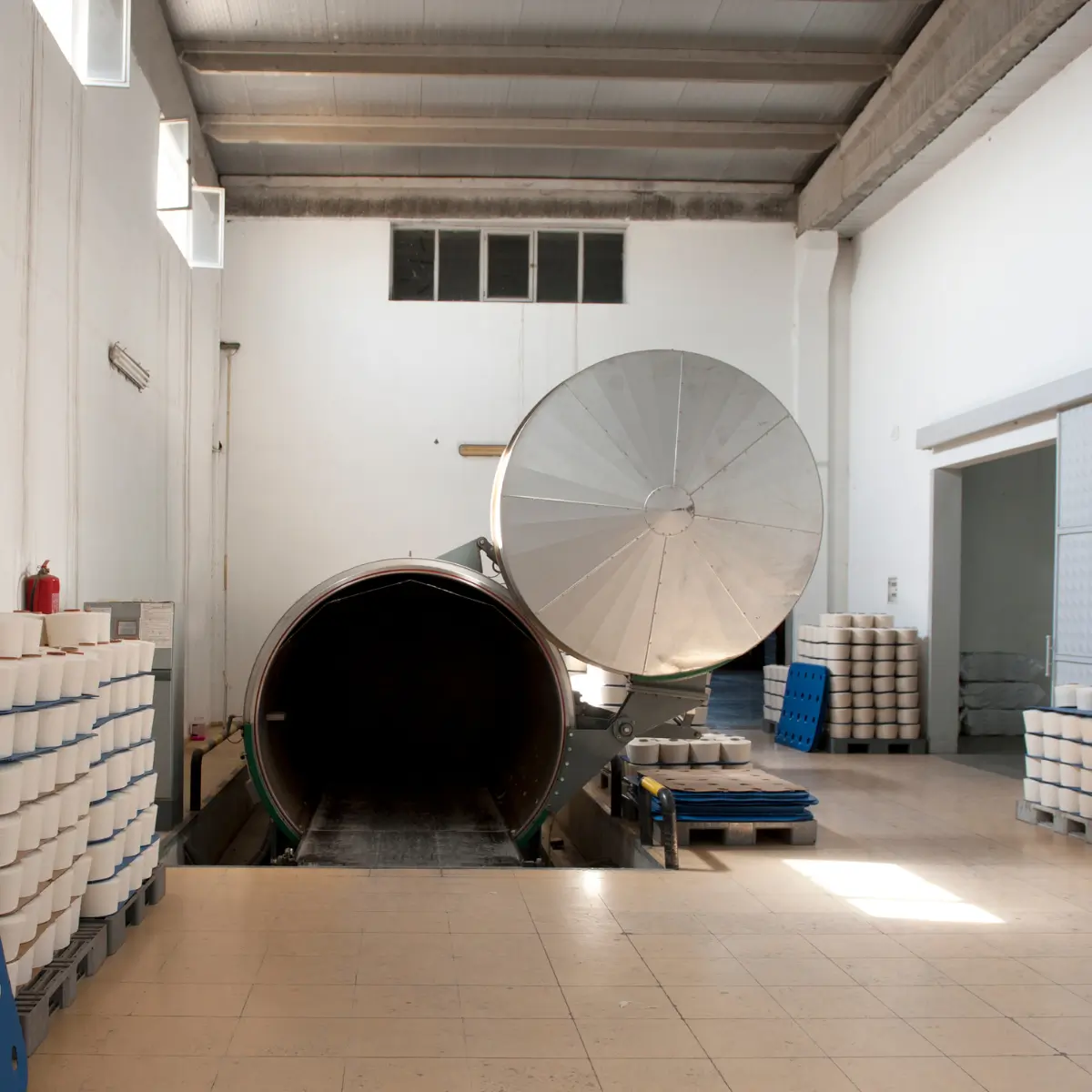
What is the use of autoclave treatment?
Autoclave treatment is a fire protection method that involves deeply impregnating wood with a fire-retardant product, under pressure, in a closed chamber. This process significantly enhances the fire resistance of the treated wood by slowing down flame spread and increasing the safety of the structures where it is used.
This technique is particularly suitable for wood materials that require lasting and deep fire protection, ensuring that the product penetrates the wood fibers. Unlike surface methods like spraying, pressure treatment acts at the core of the material, providing a longer and more effective protective barrier.
One of the main advantages of autoclave treatment is its ability to offer classified protection, in accordance with Euroclass B-s1, d0 standard or lower depending on the type of wood. It is suitable for projects requiring long-term fire resistance.
It ensures increased security for woods intended for permanent constructions or structures exposed to fire risks.
Advantages of autoclave treatment
- Deep protection: The autoclave treatment ensures the product is thoroughly impregnated, embedding the fire-retardant agent deep within the wood and guaranteeing long-lasting and effective fire protection.
- Solution suitable for dense materials: Thanks to pressure-assisted penetration, this method is ideal for treating thicker or denser timber, ensuring optimum fire resistance.
- Compliance with safety standards: Autoclave treatment, carried out by our partners, reaches Euroclass B-s1,d0 under the conditions of the test report for the process used. Equivalence between a Euroclass and the French M classification is never automatic: it falls under Annex 4 of the French order of 21 November 2002 and is assessed with your inspection body.
- Durability: Pressure-treated timber offers long-term fire protection, making it an ideal solution for permanent projects requiring enhanced safety.
- Homogeneous solution: Pressure treatment ensures that the fire-retardant is evenly distributed throughout the wood, without altering its appearance or physical properties.
Your questions about pressure-treated timber
The application of intumescent varnish
What is intumescent paint?
Intumescent paint is a fire protection method that involves applying a special fire-retardant coating directly to the surface of a material. This coating reacts to intense heat by swelling to form an insulating barrier known as “Meringue”. This process aims to slow down the rise in temperature of the treated materials and delay the spread of flames, thereby improving their fire resistance, whether they are made of wood, metal or other flammable surfaces.
This method is particularly suitable for surfaces that require effective protection without compromising their appearance. Unlike other fire-retardant solutions, intumescent varnish forms an insulating layer on the surface whilst preserving the material’s appearance.
One of the main advantages of intumescent paint is its ability to provide discreet and long-lasting fire protection.
It protects the wood whilst preserving its original appearance, making it an ideal solution.
Intumescent paint can also be tinted to suit any aesthetic.
How does this fire-retardant treatment work?
- Application: The intumescent varnish is applied directly to the surface of the material to be treated using a spray gun. This treatment is suitable for a variety of substrates, such as wood. It may cause the wood to whiten, depending on the species.
- Activation: When exposed to high temperatures in the event of a fire, the varnish begins to react. It swells to form a protective foam known as ‘meringue’, which thickens as the heat increases.
- Insulation: This intumescent foam creates a dense thermal barrier that prevents heat from penetrating the material quickly. It thus protects the underlying structure from damage caused by heat and flames.
- Fire retardancy: This barrier significantly slows down the combustion of the material, thereby delaying the spread of fire. This provides valuable time for people to evacuate the premises and for the emergency services to respond, thus reducing the risk of major damage.
The benefits of intumescent paint
- Enhanced protection: Intumescent paint plays a crucial role in fire protection by helping to contain the fire and minimise property damage. By increasing the time it takes for materials to ignite, it extends the window of opportunity for the safe evacuation of a building’s occupants and gives emergency services more time to bring the situation under control, thereby reducing risks to both people and property.
- Preserved aesthetic appearance: Unlike other, more visible fire-retardant treatments, intumescent varnish is designed to be transparent and does not alter the original appearance of the treated materials. This makes it an ideal solution for projects where aesthetics are important, such as in the case of timber structures or decorative finishes. However, on wood, it may occasionally cause a slight change in colour, without compromising the natural appearance of the material.
- Compliance with standards: The application of intumescent varnish ensures compliance with the European Euroclass B-s1, d0 standard, which guarantees high fire resistance with low smoke emission and no production of flaming droplets. By choosing this solution, you not only ensure the safety of your facilities but also their compliance with current fire safety regulations, which is essential for public or commercial projects.
Vos questions sur le vernis intumescent
Pourquoi choisir nos services de traitement du bois ?
Partenaires spécialisés avec équipements de pointe :deux procédés complémentaires pour le bois — l’autoclave (imprégnation à cœur, sous pression) et le vernis intumescent (protection de surface). Nous vous orientons vers celui adapté à votre projet.
Réactivité et adaptation à vos besoins : Chez Alfaflor, nous assurons une gestion rapide et personnalisée de vos projets. Grâce à notre réseau, nous adaptons nos traitements selon vos exigences et assurons des délais respectés pour vos chantiers.
Conformité aux normes de sécurité européennes : selon le procédé — notre ignifugeant Euromassif bois fait obtenir le M1 (classement français, PV LNE) ; l’autoclave et le vernis intumescent (partenaires) atteignent l’Euroclasse B-s1,d0 (classement européen). La conformité finale s’apprécie avec votre bureau de contrôle.