For establishments open to the public, flame retardant treatment is essential to ensure fire safety. It’s a process that makes materials less flammable, delaying their combustion and thus contributing to fire prevention. But what does this treatment involve, and why is it necessary?
Flame retardant treatment aims to make materials resistant to fire or reduce their flammability. This includes methods such as chemical treatment, application of flame retardants, coating with flame retardant paints or varnishes, and heat treatment. These techniques create physical barriers or modify the chemistry of materials to slow the spread of flames. The main objective is to buy time for evacuation and emergency services intervention while minimizing material damage during a fire.
What materials can be fireproofed?
The following materials can be fireproofed :
- Textiles : Clothing, upholstered furniture, curtains, carpets.
- Wood : Solid wood, plywood, particle board.
- Plastics and Polymers : Used in electronics, furniture, construction materials.
- Construction Materials : Plasterboard, insulation, fire-retardant paints.
- Paper and Cardboard : Packaging, decorations, office products.
- Foam : Mattresses, upholstered furniture, insulation.
These treatments delay combustion and reduce the risk of fire.
What are the different forms of fireproofing ?
- Chemical Treatment : Application of flame retardants to the surface or incorporation during manufacturing.
- Fire-Retardant Coatings : Application of paints, varnishes, or special coatings to materials for fire protection.
- Heat Treatment : Using thermal processes to modify the structure of materials and enhance their fire resistance.
- Impregnation Treatment : Soaking materials, such as wood, with flame retardant solutions to reduce flammability.
- Physical Treatment : Adding physical barriers or protective layers (e.g., plasterboard) to insulate combustible materials from heat sources.
These methods aim to slow the spread of flames and reduce the production of heat and flammable gases.
Flame-retardant treatment, an obligation for establishments open to the public
Establishments open to the public are required by law to comply with fire safety regulations. This means that in the event of a fire, criminal liability could be incurred. Fireproofing is therefore of great importance for the hospital sector, hotels, restaurants, and schools. Furniture, decorations, and materials in these establishments must undergo fireproofing treatment.
Specialized companies issue a fireproofing certificate after applying the flame retardant treatment. This certificate must be kept on hand, as it may be requested during safety checks.
What are the different fireproofing processes?
The addition of chemicals influences fire behavior in several ways :
- Absorption de la chaleur : Les produits chimiques absorbent la chaleur, réduisant ainsi la température des matériaux et ralentissant leur combustion.
- Formation d’une couche superficielle carbonisée (phosphore) : Une couche carbonisée se forme, isolant le matériau sous-jacent et empêchant la propagation des flammes.
- Émission de gaz inertes : Certains produits chimiques libèrent des gaz qui diluent les gaz combustibles, empêchant la formation et la propagation des flammes. Les matériaux deviennent ainsi moins inflammables grâce à la réticulation des chaînes de polymères, qui renforcent leur structure et leur résistance au feu.
A highly controlled process via reaction to fire classifications
In the case of legal obligations, fire standards undergo rigorous control. French legislation has established classifications for the flammability of materials to assess their fire resistance:
- M0 : Non-combustible materials such as cement, brick, and glass.
- M1 : Combustible but non-flammable materials such as PVC, composite materials, and fire-resistant materials like wood.
- M2 : Hardly flammable combustible materials.
- M3 : Moderately flammable combustible materials.
- M4 : Easily flammable combustible materials.
- M5 : Very easily flammable combustible materials.
For flame retardant treatments, specialists guarantee the quality and classification of their treatment.
What are the different products for fireproofing?
- Intumescent paints and varnishes : These products swell when exposed to heat, forming a thick insulating layer that protects the underlying material from flames and heat. This process helps slow the spread of fire and minimizes property damage.
- Brominated flame retardants : These are chemical compounds containing bromine, used to reduce the combustibility of materials. They slow the spread of flames by disrupting the chemical reactions involved in combustion. These products are often used in plastics, textiles, and building materials but have raised environmental concerns and are banned in certain regions due to toxicity. Although effective, some brominated products are banned in Europe due to their toxicity and the environmental risks associated with their use and degradation.
-
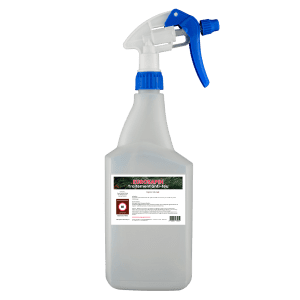 Fire-retardant for natural Christmas trees39,10 € HT
 -
 Fire retardant textile – Eurotextil47,00 € HT
 -
 Fire retardant for wood – Eurobois39,10 € HT
 -
 Flame retardant artificial plants – Euroflor51,20 € HT
What are the different flame retardant treatments possible?
- Surface Fire Retardants : Varnishes or paints applied to the surface of materials to protect them from fire.
- Protection of Steel Structures : Fire-retardant wood can be used to protect steel structures, providing additional fire protection.
- Cellulose Wadding : Used as insulation, this material is treated with fire retardants to reduce its combustibility. It offers good fire resistance and excellent thermal and acoustic insulation properties.
- Pad Application : For flame-retardant fabrics, this method involves immersing textiles in a flame-retardant solution, then drying and polymerizing them. Some textiles are naturally non-flammable, while others require treatment to improve their fire resistance.
How to apply a fire retardant treatment ?
You may decide to purchase flame-retardant fabric or material directly. It doesn’t require applying a fire-retardant treatment. In most cases, for fabrics, wood, or decorative elements, it’s the responsibility of the individual to apply the fireproofing treatment. The most practical solution is usually using a fire-retardant spray treatment. First, identify the material to be treated and determine the number of sprays required. Then, it’s very simple. Using a sprayer, apply the fire retardant product directly to the material. If you are working with larger areas or need assistance, our team is here to guide you in your choices and can even treat your materials directly in our workshop. Contact us.